
How HydroFlow Water Distribution Works in 3 Steps
HydroFlow water delivery takes place beneath the riding surface. The system works in three connected steps: subsurface delivery, sensor-led control and capillary movement through the footing.
Table of Contents
1. Water is delivered beneath the surface
A network of pipes is installed beneath the riding arena. This places water closer to the working surface without depending entirely on overhead irrigation.
Delivering water below the footing can help reduce losses caused by evaporation before water reaches the areas where it is needed.
2. Sensors and zones help manage moisture
Arena conditions rarely remain identical across the entire surface. Sunlight, shade, wind exposure, trees and the frequency of use can all influence how quickly different sections dry out.
HydroFlow’s zone-based approach allows irrigation to be managed according to the needs of different areas, depending on the installation’s configuration. Moisture sensors and programmable controls support decisions about when and where water should be supplied.
For example, one end of an outdoor arena may receive direct sunlight for most of the day, while the opposite end remains shaded by trees. The sunny section may need additional moisture, while the shaded section may require less.
With appropriately designed zones, these areas can be managed separately. This helps address local differences without unnecessarily watering sections that already have sufficient moisture.
3. Natural capillary action moves water through the footing
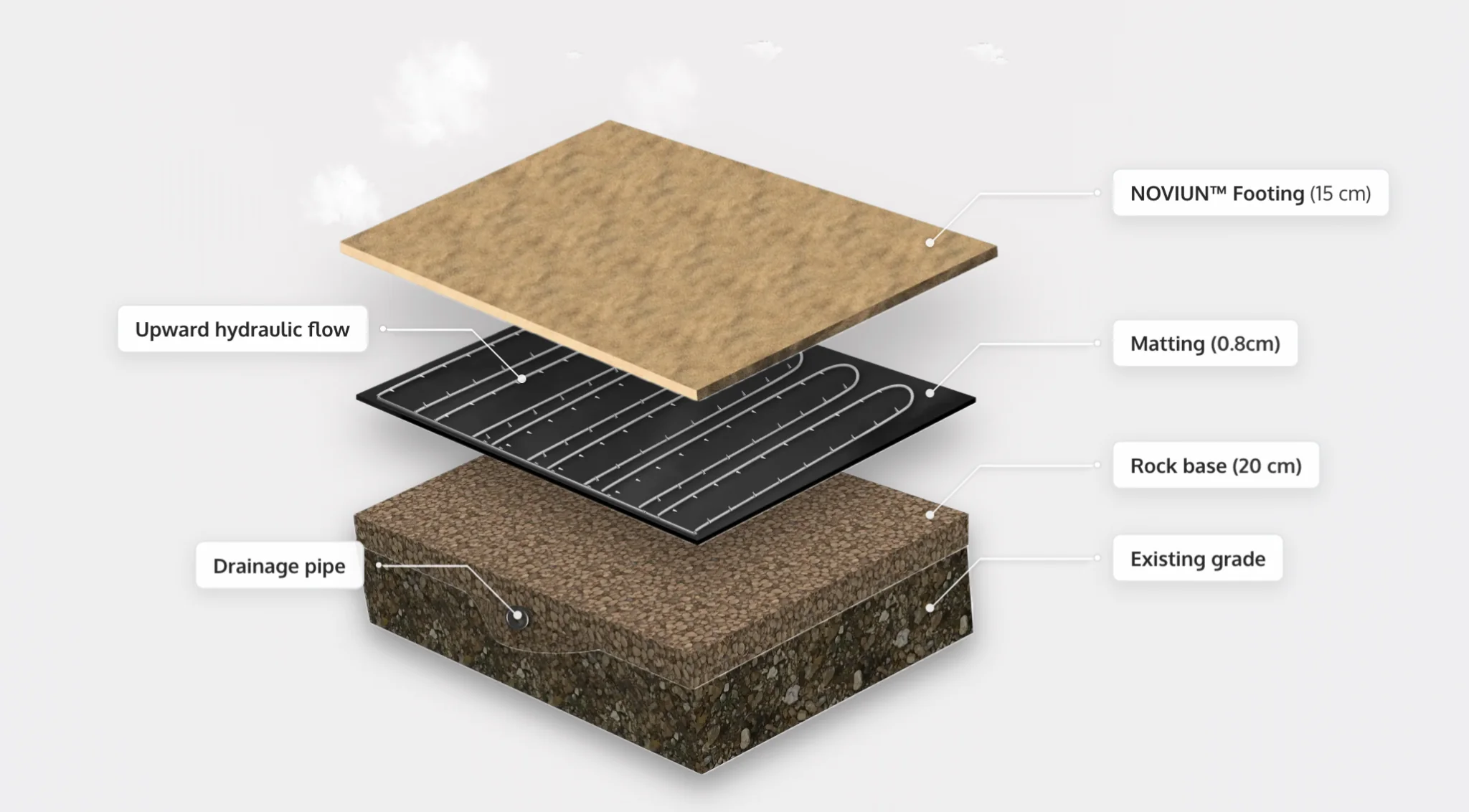
Once water reaches the area beneath the riding surface, capillary action helps move it through the fibre and sand mixture.
The Noviun Fibre structure is designed to support this movement, helping moisture travel through the footing instead of remaining concentrated around isolated points.
The objective is to bring moisture towards drier areas while maintaining a more balanced distribution throughout the working depth. When combined with sensor-led control and appropriate drainage, this approach can help limit excess watering and support consistent surface conditions.
The Role of Noviun Fibre in Water Management
HydroFlow is designed to work alongside Noviun Fibre, the natural fibre blend developed for equestrian arena surfaces.
The relationship between the fibre and water is central to the system. The fibres integrate with the sand, helping create structure within the riding surface while supporting the movement of moisture through the mixture.
Noviun’s approach uses natural fibres rather than conventional synthetic fibres such as polypropylene. The company states that its fibre structure supports capillary water movement, helping moisture distribute through the footing.
Synthetic fibres can behave differently depending on their size, shape, concentration and interaction with sand. Some mixtures may restrict water movement or encourage uneven distribution. This is why the compatibility of the footing material and irrigation system should be considered during arena design.
By pairing HydroFlow with Noviun Fibre, the aim is to create a surface in which water management and footing performance work together.
The result is intended to support consistent grip, stability, cushioning and dust control, while reducing dependence on repeated overhead watering.
Discover more about Noviun’s natural fibre arena surfaces.
HydroFlow Water Efficiency and Surface Consistency
Water consumption is an increasingly important consideration for arena owners, particularly in regions experiencing hot summers, prolonged dry periods or restrictions on water use.
Traditional overhead watering can lose water through evaporation, wind drift and runoff. HydroFlow water is delivered beneath the riding surface, where it can move through the footing rather than being exposed immediately to the air.
Noviun reports that HydroFlow water use can be 60 to 75% lower than traditional overhead irrigation. The actual saving will vary according to weather conditions, arena size, footing composition and usage.
More controlled irrigation can also help reduce the need for frequent manual watering. When moisture levels remain more consistent, arena managers can spend less time responding to dry patches and adjusting watering routines.
For owners investing in all weather arena surfaces, this makes irrigation an important part of the wider conversation about operating costs, maintenance and long-term performance.
Can HydroFlow Reduce Surface Disruption?
Maintaining riding arena footing involves regular grading, harrowing and checking the surface for changes in depth and consistency. Excessive watering can contribute to surface disturbance, particularly when water pools, runs off or creates areas with different moisture levels.
By delivering water beneath the footing, HydroFlow is designed to minimise surface pooling and help maintain a more balanced moisture profile.
This can support routine arena maintenance by reducing some of the problems associated with uneven overhead watering. However, regular grooming, appropriate footing depth and correct drainage remain essential. Subsurface irrigation complements these practices rather than replacing them.
The aim is to maintain the surface’s working properties while reducing unnecessary intervention.