
How HydroFlow Subsurface Irrigation Works in an Equestrian Arena
A smarter approach to water management, consistent riding arena footing and all-weather performance.
Water management plays an essential role in the performance of equestrian arena surfaces. Too little moisture can lead to dust and deep, dry areas, while uneven watering can create inconsistent footing across the arena. For riders, horses and arena managers, maintaining the right moisture balance is an important part of creating a reliable training environment.
Noviun Surfaces and ArenaMend address this challenge through natural fibre arena footing and HydroFlow, a subsurface irrigation system designed to deliver water from beneath the riding surface. By combining controlled water distribution with the natural capillary properties of Noviun Fibre, the system aims to maintain more consistent footing while reducing water consumption.
This article explores how HydroFlow works, how it differs from traditional irrigation methods and why integrating irrigation into arena construction can make a difference to the long-term management of equestrian arena surfaces.
Table of Contents
What Is Subsurface Irrigation?
Traditional arena watering typically applies water from above, using sprinklers, hoses or water bowsers. Although these methods can help control dust and maintain moisture, the results depend on factors such as weather, evaporation, arena layout and how evenly the water reaches the surface.
Subsurface irrigation takes a different approach. Instead of applying water directly to the riding surface, HydroFlow delivers it through a network of pipes installed beneath the arena footing.
The water then moves upwards through the surface using capillary action. With the help of moisture sensors and programmable controls, the system can manage water delivery according to the requirements of the arena.
According to Noviun Surfaces, HydroFlow is designed to reduce evaporation and runoff while distributing moisture more evenly throughout the riding surface. HydroFlow has a potential water savings of 60 to 75% compared with traditional overhead irrigation, although actual consumption depends on the arena, climate, construction and maintenance programme.
Learn more about the technology on the Noviun HydroFlow product page.
Why Consistent Water Distribution Matters for Equestrian Arena Surfaces
The quality of riding arena footing depends on more than the materials used. Moisture levels also influence how the surface responds under a horse’s hooves.
When some areas become dry while others retain more moisture, the arena can develop differences in firmness, grip and stability. These variations can affect how the horse moves and how predictable the footing feels during training and competition.
Consistent moisture management helps maintain more uniform surface conditions. It also supports dust control and can reduce the need for repeated manual watering.
This is particularly important for all weather arena surfaces exposed to changing temperatures, direct sunlight, wind and rainfall. An outdoor arena may dry quickly along one side while remaining damp in a shaded section. Indoor arenas face different conditions, but they still require appropriate moisture levels to maintain their footing.
HydroFlow is designed to address these variations by distributing water beneath the surface and allowing the irrigation system to respond to different moisture requirements.
HydroFlow vs Ebb and Flow vs Leaky Pipe Irrigation
Not all irrigation systems deliver water in the same way. Understanding the differences helps arena owners make informed decisions when planning new equestrian arena surfaces.
Ebb and Flow
Ebb and Flow systems work by raising and lowering the water level within a holding layer beneath the riding surface. The system floods the surface from below, often keeping the underlying layer saturated as water levels rise and fall.
A key concern with this approach is that repeated flooding can leave excess moisture beneath the top few inches of footing. This can encourage an algae layer to develop below the surface, which may make the footing slippery and affect grip for horses. Managing the water level carefully is important to avoid excessive saturation and maintain suitable riding conditions.
This approach relies on the construction of the underlying layer and its ability to distribute and release water as intended. The performance of an Ebb and Flow installation depends on its design, drainage and interaction with the riding surface.
Leaky Pipe Systems
Leaky pipe irrigation uses perforated or porous pipes to release water along their length. Water moves from the pipes into the surrounding material, with distribution influenced by pressure, pipe layout, base characteristics and the system’s hydraulic design.
One limitation is that the system may struggle to move enough water up to the top quarter-inch of the footing to keep this layer from becoming dusty. Even when the system uses a substantial amount of water, the moisture may not reach the surface effectively, leaving the upper layer too dry while water consumption remains high.
HydroFlow Subsurface Irrigation
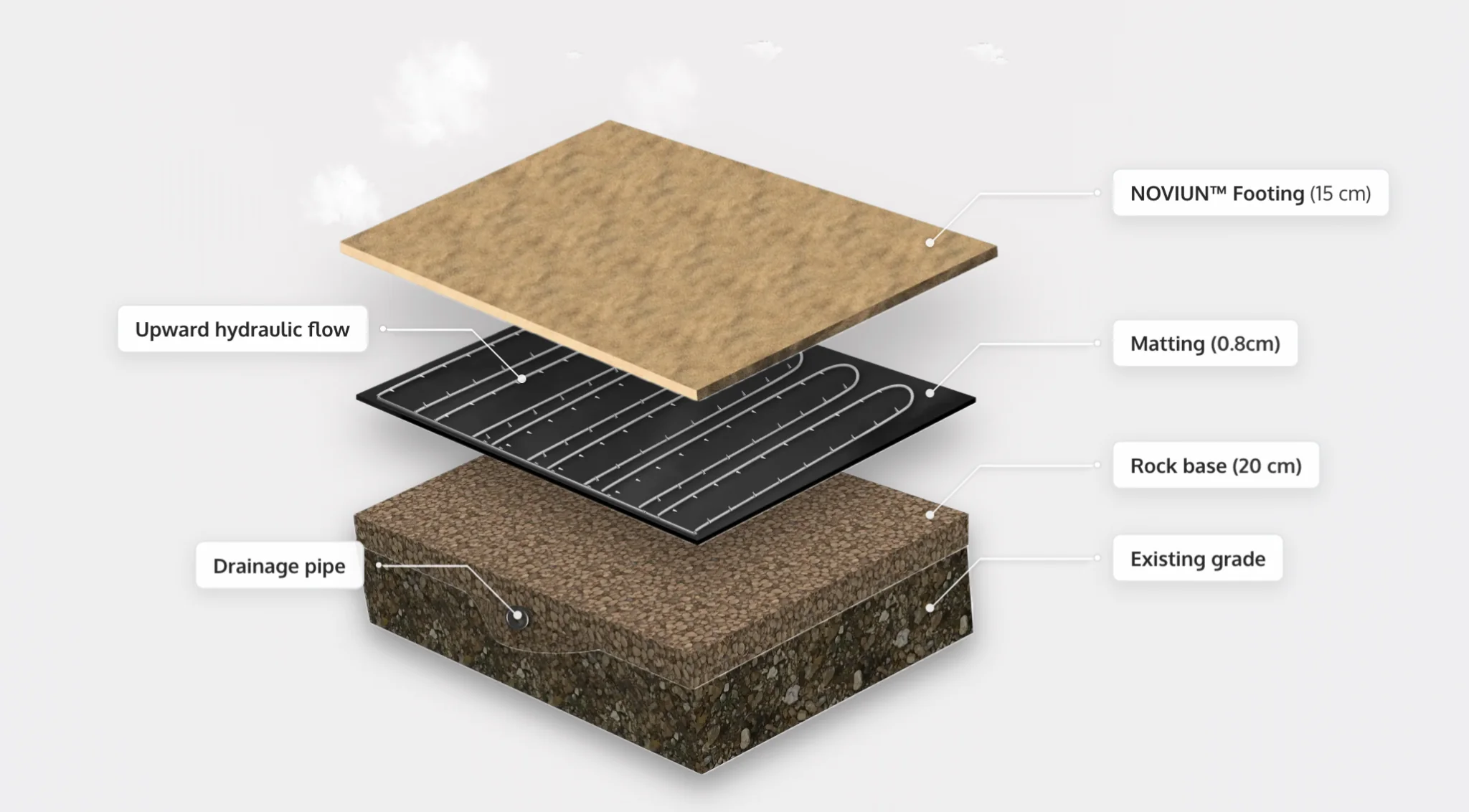
HydroFlow combines a subsurface pipe network with moisture sensors, programmable controls and the capillary properties of Noviun Fibre.
Rather than relying only on water released from pipes to reach the surface, the system is designed to encourage water to move upwards and across the riding footing through the natural wicking action of the fibre structure.
Noviun describes HydroFlow as a system engineered to work with its natural fibre surface, supporting controlled moisture distribution while limiting unnecessary water use.
The main distinction is the way HydroFlow combines water delivery, monitoring and natural fibre integration. The effectiveness of any irrigation system ultimately depends on correct design, installation and the characteristics of the complete arena construction.
For more information about Noviun’s approach to arena watering, read Rethinking Arena Watering: Consistency, Efficiency, and Powerful Surface Design.
HydroFlow is designed to manage moisture through three connected elements: subsurface water delivery, sensor-based control and capillary movement through the footing.
5 Key Benefits of HydroFlow for Equestrian Arena Surfaces
Bringing these points together, HydroFlow offers five key benefits for equestrian arena surfaces:
- Lower water use: Noviun reports potential savings of 60 to 75% compared with traditional overhead irrigation.
- More consistent footing: water is distributed beneath the surface, reducing dry patches.
- Less evaporation and runoff: water is delivered below the footing.
- Dust control: steady moisture helps keep dust down.
- Controlled watering: moisture sensors and programmable controls decide when and where water goes.
For riders, horses and arena managers, these benefits make HydroFlow a practical option when planning or upgrading equestrian arena surfaces.