
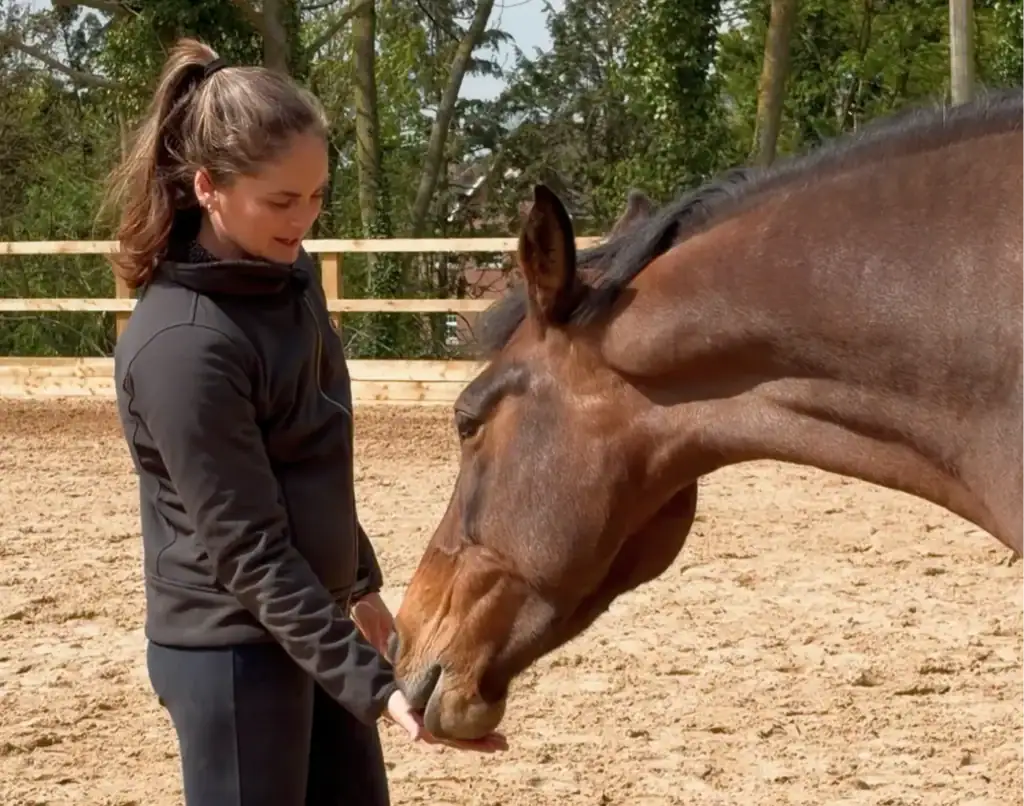
Miri Hackett works with horses across training, young horse development, and rehabilitation. Her approach focuses on understanding each horse as an individual, adjusting training around their needs, and building communication that develops trust and clarity over time.
Where Horse and Surface Meet in Performance
Modern equestrian performance depends on many factors, but one of the most consistent influences sits under the horse’s hooves. Noviun focuses on creating footing that supports natural movement, recovery, and long-term soundness. That connection between horse and surface is central to how Miri approaches her work, where every detail in the environment shapes how a horse feels and responds.
Her training method stays flexible rather than fixed. Each horse sets the direction, and the rider adapts.
“I let the horses teach me the most now,” she explains. “I have a basis I follow, and then I shape that to every horse that comes into our care.”
A Horse That Shifted Everything
That mindset developed through experience, and one horse changed her approach completely.
About ten years ago, a pony named Kenco arrived to be backed after a difficult start in life. The situation required patience and a complete change in approach. Rather than move the horse on, Miri took her on herself.
“She was so sensitive, and I had to learn a totally different way to communicate because of her”, she says. “She changed the whole way I see things. I’m so grateful to her, she was the catalyst who led me to where I am today.”
That moment shaped how she now views both training and environment. The horse guides the method, and everything around the horse must support that communication.
Unlearning and Listening More Closely
Her approach continues to evolve through constant adjustment.
“Yes, absolutely, and I still am now.”
That idea of unlearning sits at the centre of her work, especially in rehabilitation where behaviour often reflects discomfort in the body.
One case that stayed with her was a mare named Bea, who struggled with severe separation anxiety linked to physical pain.
“She was hurting in her gut, and I’ll never forget how different she was when her gut wasn’t painful anymore,” she says. “When horses are seemingly giving you a hard time, normally they themselves are having a hard time.”
That understanding carries directly into how she evaluates training conditions, including footing.
Why Footing Became Part of the Conversation
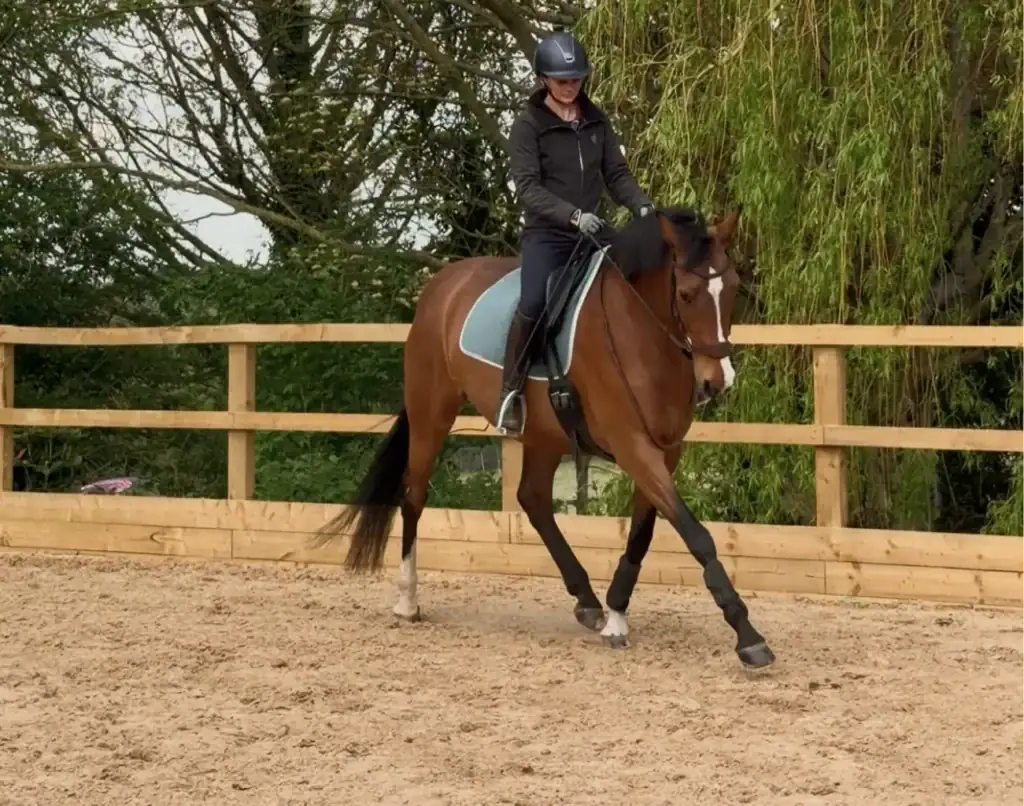
For Miri, how a horse moves is never separate from what it moves on. The ground affects balance, confidence, and the way a horse uses its body in every stride.
That is where Noviun becomes part of her perspective.
When she first rode on a Noviun surface, the experience connected directly with her philosophy of listening to the horse.
“I have never felt a surface so supportive of horses and their natural way of moving. It’s like the ground holds them how nature intends.”
The key difference she describes is not just softness or firmness, but how the surface responds consistently to the horse.
Consistency Builds Trust in Movement
That consistency links closely to how she trains. Horses learn through repetition and clear feedback, and an inconsistent surface can interrupt that learning.
“It’s so consistent. I thought our previous sand and rubber surface was pretty good, but with Noviun, it’s the same everywhere. The horses appreciate it because they can trust the surface is always the same, so they can really start to show us their full moving potential.”
This is where her training philosophy and Noviun’s design meet in the same idea. The horse can only respond clearly when the environment stays predictable enough to build confidence.
Movement, Soundness, and the Role of the Surface
Miri also highlights how footing influences long-term soundness. The way a hoof meets the ground and releases again shapes pressure through tendons and joints.
“Because it’s not wax, and because the fibre is so evenly spread through the sand, it allows for the natural slide horses need. If the surface grips them or blocks them, it adds pressure to the structures in the leg and causes injuries over time. That was one of the big reasons I chose Noviun.”
Her view connects directly to Noviun’s goal, supporting movement that stays natural while reducing unnecessary strain over time.
From Daily Training to Long-Term Welfare
Across disciplines, she sees footing as a daily factor that influences both performance and behaviour. A horse that feels secure underfoot moves with more confidence, and that confidence carries into training progress.
“Absolutely. I don’t think until you see the difference of a Noviun arena you would believe how different the horses can feel.”
Closing Perspective
For Miri, training always comes back to communication. The rider listens, the horse responds, and the environment either supports or disrupts that exchange.
“That’s just what the horse is offering on that day. If I allow it to make me frustrated, I’m just missing what the horse is trying to tell me. Slow is smooth, and smooth is fast.”
In that exchange between horse and rider, Noviun becomes part of the conversation. Not as a background detail, but as the ground that helps make clear communication possible in every stride.